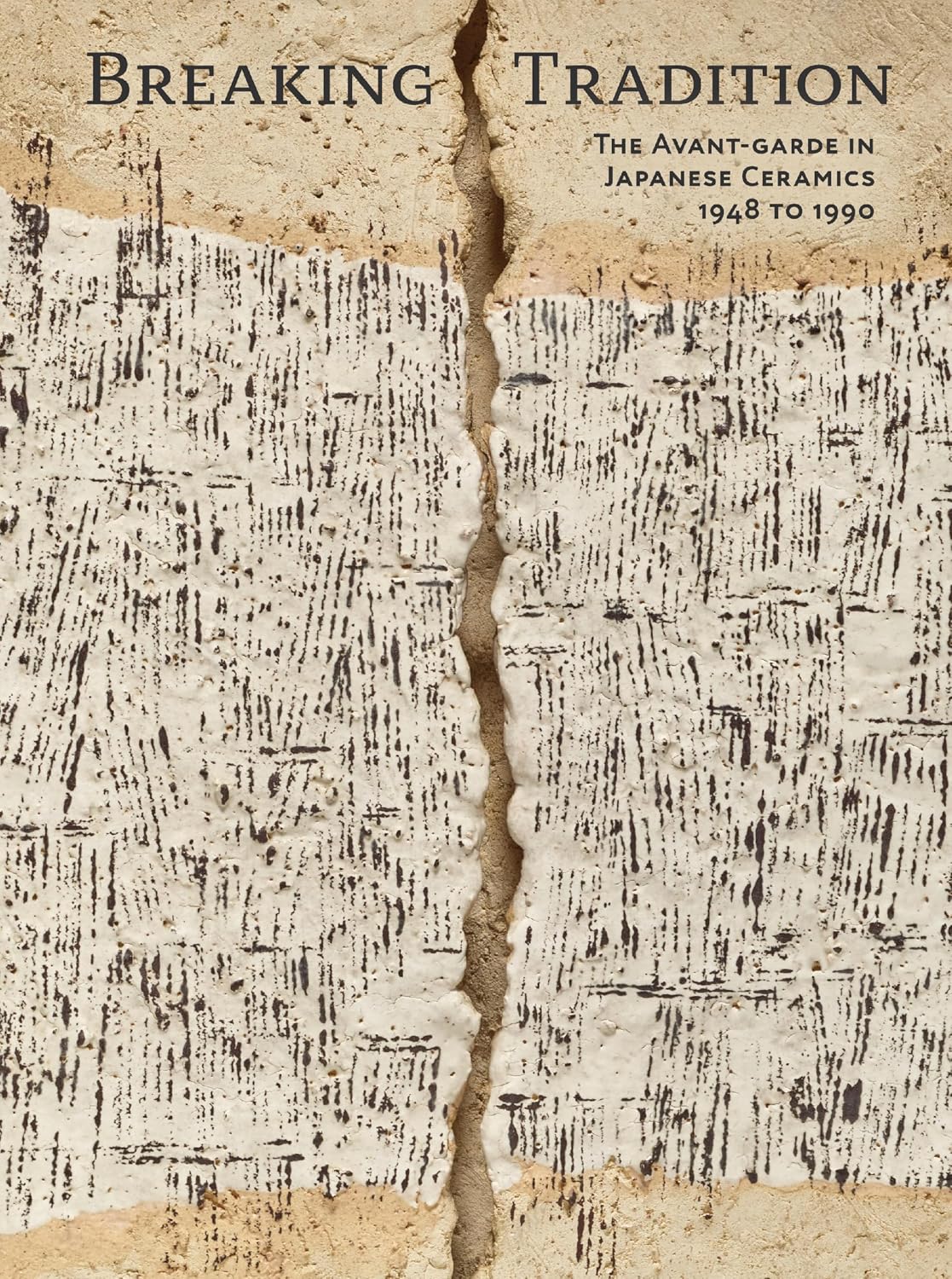
Breaking Tradition: The Avant-Garde in Japanese Ceramics 1948 to 1990
Breaking Tradition: The Avant-Garde in Japanese Ceramics 1948 to 1990
Author: Andreas Marks, Kida Takuya
Publisher: Tuttle Publishing
Publishing Date: 2026-10-06
SKU:Art
Low stock: 1 left
Couldn't load pickup availability
For many Japanese artists, the process of conceptualizing and producing artwork underwent fundamental change after the end of World War II in 1945. The long-standing emphasis on continuity, as was embedded for centuries in traditional media, formats, and hereditary lineages, was rejected by some in favor of a radical new approach, particularly within the field of ceramics. The emergence of an avant-garde and a formal pursuit of innovation can be traced across multiple media. One significant development was the shift by certain artists toward the creation of sculptural forms rather than functional objects. In 1948, a group of five ceramic artists, including Yagi Kazuo (1918-1979), Yamada Hikaru (1923-2001), and Suzuki Osamu (1926-2001), founded Sodeisha—literally, the Crawling through Mud Association. The group remained active until 1998. While more than 60 artists were associated with Sodeisha over time, not all ceramic artists pursuing innovative sculptural work chose to join. Artists such as Kawamoto Goro (1919-1986) and Morino Taimei (born 1934) worked independently, developing distinct artistic paths.
Share