1
/
of
1
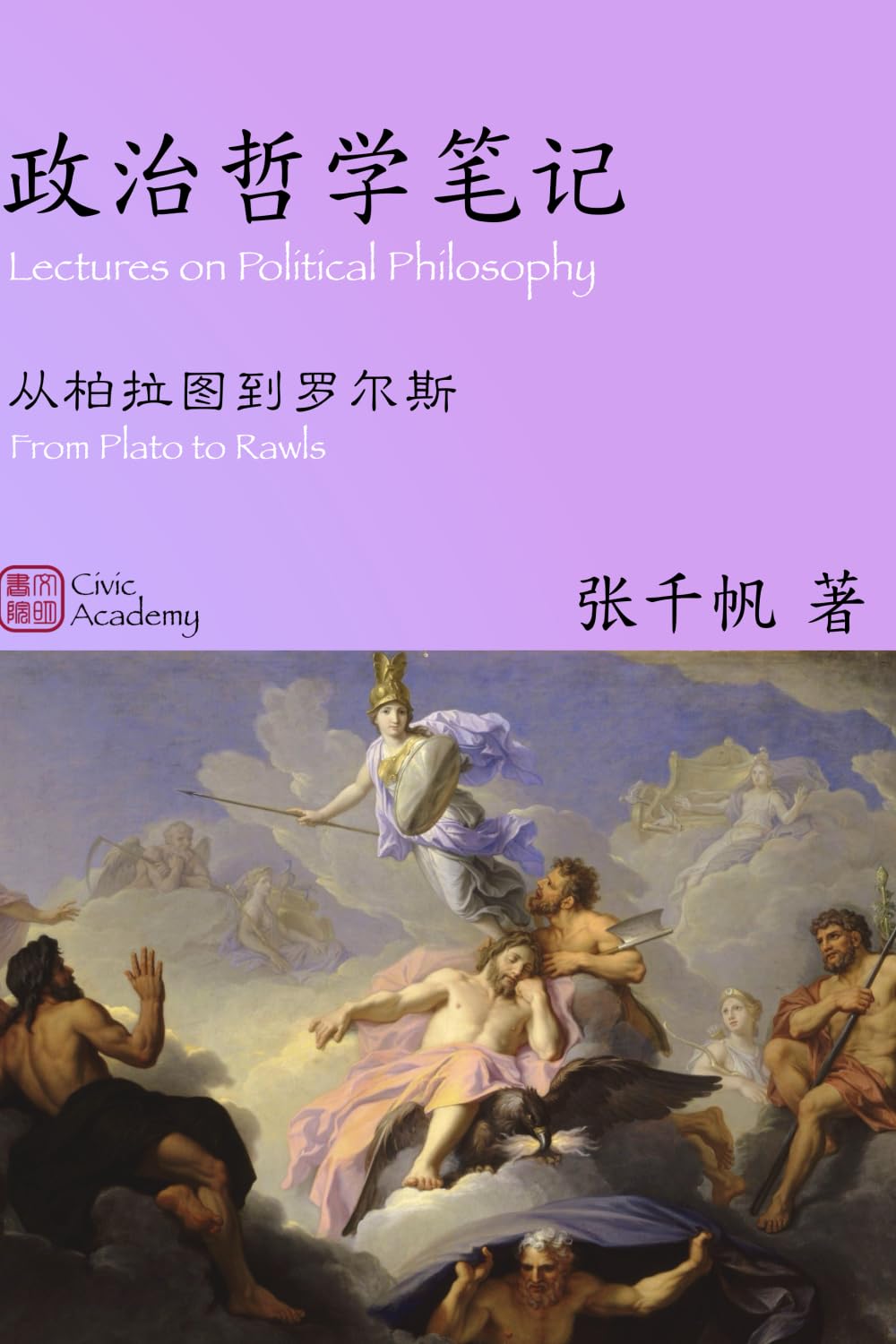
政治哲学笔记: 从柏拉图到罗尔斯
政治哲学笔记: 从柏拉图到罗尔斯
Author: 张千帆
Publisher: Civic Academy
Publishing Date: December 25, 2025
SKU:海外华人出版
Out of stock
Regular price
$28.00
Regular price
Sale price
$28.00
Shipping calculated at checkout.
Quantity
Couldn't load pickup availability
Classical Western political philosophy began with Plato, reached a turning point with Machiavelli, and entered the liberal age with Hobbes. After the wave of rationalist Enlightenment, Europe showed an inclination of returning to absolutism, as illustrated in Kant’s systematic theorization of Rousseau’s holistic influence.
The American Revolution shattered the traditional structure of colonial empires. Tocqueville foresaw the coming upheavals -- the emergence of mass democracy, capitalism and the nation-state, which brought about an unprecedented transformation of the world. The disintegration and reconfiguration of the global order resembled a massive earthquake, with the resulting imbalance and discontent giving rise to radical ideologies represented by Marx on the far left and Nietzsche on the far right, laying the intellectual foundation for the totalitarian movements of the twentieth century.
After World War II, thinkers like Hannah Arendt put an end -- at least temporarily -- to Western political thought through critiques of totalitarian regimes. Entering the welfare-state era, Rawls’s theory of justice as fairness addressed the wrong question: political democracy itself was sufficient to legislate human empathy. Forcing the political process into a contractual one through the notion of justice blurred the boundary between individual desert and social beneficence, failing to inspire the underprivileged while encouraging a self-assured radical left, whose excessive zeal inevitably provoked an equally radical and self-assured right.
The American Revolution shattered the traditional structure of colonial empires. Tocqueville foresaw the coming upheavals -- the emergence of mass democracy, capitalism and the nation-state, which brought about an unprecedented transformation of the world. The disintegration and reconfiguration of the global order resembled a massive earthquake, with the resulting imbalance and discontent giving rise to radical ideologies represented by Marx on the far left and Nietzsche on the far right, laying the intellectual foundation for the totalitarian movements of the twentieth century.
After World War II, thinkers like Hannah Arendt put an end -- at least temporarily -- to Western political thought through critiques of totalitarian regimes. Entering the welfare-state era, Rawls’s theory of justice as fairness addressed the wrong question: political democracy itself was sufficient to legislate human empathy. Forcing the political process into a contractual one through the notion of justice blurred the boundary between individual desert and social beneficence, failing to inspire the underprivileged while encouraging a self-assured radical left, whose excessive zeal inevitably provoked an equally radical and self-assured right.
Share